Home > Newsstand > Federal News Radio > WFED Stories

Transparency grades clearly lacking

January 21, 2010 - 5:29am

WFED's Max Cacas
 Download mp3


By Max Cacas
Reporter
FederalNewsRadio

One year ago today, President Obama used his first full day in office to sign a number of executive orders reflecting his commitment to "transparency" and "openness" in government. With the first year of their term behind them, how has the Obama White House performed on the promise of more open government?

That question was the focus of a day-long conference dubbed "Transparency In the Obama Administration: a First Year assessment." It was held at the American University's Washington College of Law, and sponsored by the Collaboration on Government Secrecy.

A panel of representatives from some of Washington's best-known good government groups give the administration letter-grades ranging from B+ to F in executing its promises on open government, as typified by its response to the Freedom of Information Act, significant policy announcements like the Open Government Directive, and a number of transparency-related executive orders.

Lucy Dalglish, executive director of the Reporters Committee for Freedom of the Press recalls some of her first meetings with White House officials on the topic, meetings distinguished by a "different attitude":

We were thrilled to be able to meet with transition team members, both as part of larger open government groups, as well as transition team with just the media interests. It was a very strange experience to meet with those folks, and when we said we want something, and why we want it, to be met with a smile, and "I think we can take care of that, anything else?"

But now, with the passing of 365 days, Dalglish points to one incident - the imminent, court-ordered release of photographs of alleged torture at Abu Ghraib prison - as evidence that the Obama White House isn't quite meeting its own standard when it comes to transparency.

"The Obama Administration said it was not going to appeal (a Second District court ruling ordering the release of the photos), and said they were going to release the photos. A week later, they completely flip-flopped, and the President announced they weren't going to release the photos after all."

David Sobel, senior counsel with the Electronic Frontier Foundation, says his group was stunned to find Justice Department lawyers responding in a way that was counter to the word, if not the spirit, of the memo from Attorney General Holder on a number of EFF's Freedom of Information act requests.

"We first approached the Justice Department lawyers," he explained, "and said, look, apparently there's been a major change in department FOIA policy, we would like to stay the proceedings in this lawsuit, to give the Justice Department and agencies an opportunity to go back and look at this material that is the subject of this lawsuit to determine if there's going to be any new disclosure as a result of this policy. In every one of those cases, the Justice Department opposed that approach, because their position was, 'it's not clear that there's going to be any real change.'"

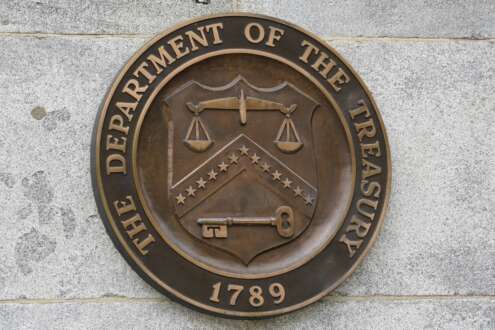
Some of the most scathing criticism came from panelist Thomas Fitton, president of the conservative watchdog group, Judicial Watch. His argument centers around the Treasury Department, and disclosures regarding the bank bailouts, and the economic stimulus program.

Both the prior and this administration engaged in unprecedented actions in terms of government intervention in the private sector. Hundreds of billions of dollars being spent, trillions of dollars of liability being incurred on behalf of the taxpayer, by three or four government agencies, and most notably the Treasury Department. The Treasury Department refuses to disclose information about the bailouts. You can't get the information. You have to sue to get the information.

Robynn Sturm, Assistant Deputy Chief Technology Officer, and Deputy Director of the White House Open Government Initiative, sought to place the transparency shortcomings of the Administration in perspective, when she told the conference, "Transparency is hard, and there are competing values we take very seriously, including national security. And so, as we figure out the right balance between those two, we want to be sure to move cautiously, and in a very considered way, and with the appropriate outcomes."

(Copyright 2010 by FederalNewsRadio.com. All Rights Reserved.)

Listen Now!

Home | About Us | Privacy Statement | Terms of Use | Copyright Infringement | EEO Public File Report | Bonneville International
AP material Copyright 2009 Associated Press. All rights reserved. This material may not be published, broadcast, rewritten, or redistributed.