Home > Pay & Benefits > Your Turn > Your Turn Archives
Your Turn with Mike Causey
Listen Wednesdays at 10:00 AM
Senior Correspondent Mike Causey takes your calls and emails live for an hour on FederalNewsRadio. Ask him about anything! From pay and benefits, to policy and politics. Send in your questions to YourTurn@FederalNewsRadio.com or call toll-free during the show: 1-877-936-9333

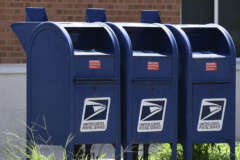
When Going Postal Is A Good Thing

March 13, 2008 - 4:19pm


If you are looking for one of the best health insurance deals in the nation join the U.S. Postal Service. It's workers get the same coverage, at about half the cost, as most other feds.

How come?

Can you say U-N-I-O-N?

Thanks to the clout of powerful postal unions, clerks, letter carriers, mail handlers and other rank-and-file postal employees pay a lot less, as in A LOT less, than feds who work for Defense, OPM, the IRS or other agencies.

Reason:

Years ago during negotiations the U.S. Postal Service agreed to pay a larger share of employee health premiums. Currently the government pays an average of about 72 percent of the total premium. But for USPS workers the company picks up about 89 percent of the total premium. So postals get the same coverage in the same plans, but at lower cost to them.

And that's going to get even better.

Starting next year the USPS will pay about 95 percent of the total premium for many employees. The American Postal Workers Union says the deal is that employees who enroll in its HD (high deductible) health plan will pay even less of their premium than they do this year. The HD plans are best for people who never get sick. The insured agrees to pay a certain deductible (and its usually pretty high) in return for a low premium. Like the deductible in your auto insurance plan. The higher the deductible, the lower the premium.

Unlike the white collar federal workforce which is largely non-union, the majority of postal clerks and letter carriers belong to the APWU, the National Association of Letter Carriers or the Mail Handlers Union. They also pay dues and, during the 1950s and 1960s led the charge in Congress for major improvements in benefits. Many of the benefits won by the postal union members were also extended to the white collar federal workforce.

But when the old Post Office Department became the quasi-independent U.S. Postal Service white collar workers were pretty much on their own. Although their unions have won major gains and even big back pay settlements, their clout is limited by a lack of membership. And dues money with which to lobby and litigate. Unions like the AFGE, NTEU, NFFE and NAGE represent a lot more employees (mostly nonmembers) than they have as card-carrying, dues-paying members.

Nobody knows how the new, more generous, USPS contribution will work next year because 2008 premiums won't be announced until sometime in August. But this is the dollar difference in premiums paid by the USPS for its employees vs., the share of premiums paid for white collar (GS) and blue collar (WG) workers and retirees.

This year a regular federal worker or retiree enrolled in the popular Kaiser standard option HMO will pay $510 in premiums. A postal worker enrolled in the same self-only plan will pay $230.

Feds and retirees in the most popular plan, Blue Cross-Blue Shield standard option, will pay $1,120 in premiums. Postals in the same plan will pay $590 thanks to the higher contribution from the USPS.

Someone enrolled in the APWU HD Plan this year would pay $740 for single coverage if they were not a postal employee and $460 if they worked for the USPS.

Listen Now!
Read Mike Causey's Federal Report
Previous Your Turn Shows

Today's News

Home | About Us | Privacy Statement | Terms of Use | Copyright Infringement | EEO Public File Report | Bonneville International
AP material Copyright 2009 Associated Press. All rights reserved. This material may not be published, broadcast, rewritten, or redistributed.