November 3, 2009 - 10:58am
| WFED's Jason Miller reports on the Federal Drive | |
| Now the agency wants to hear from others about these ideas and their own recommendations on how to fix federal HR processes. Director Berry offers to get rid of the GS system, expand who can receive bonuses and bolster training. | |
Download mp3
|
|
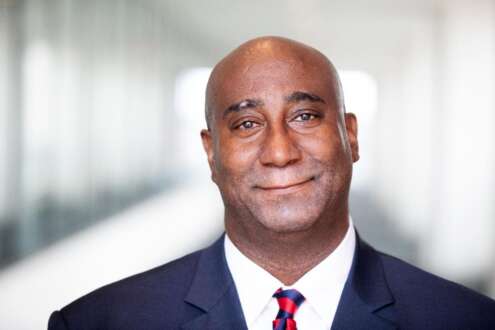
| OPM Director John Berry | |
| Listen to Berry's full speech at Syracuse University's Maxwell School. | |
Download mp3
|
|
John Berry fired the first salvo for how to "reinvigorate" and "unshackle" all aspects of federal human resources.
The director of the Office of Personnel Management laid out Monday some initial ideas about changes that he hopes could bring agency hiring, firing, recruiting and retention practices in line with other Fortune 500 companies.
"Our hiring system is broken," Berry tells students during a speech at Syracuse University's Maxwell School, where he graduated from in 1980.
"Five decades after the last major attempt at pay reform, the cracks are showing. A significant and growing number of our employees are not in the GS pay system. This system cannot stand another three decades, let alone five. We could limp along for a few more years in the current GS system, or we can seize this moment to build something new."
And that something new could mean getting rid of the General Schedule system, opening up bonuses of up to 30 percent to all employees -- not just those in the Senior Executive Service -- and make training of managers and employees the utmost priority.
Berry calls continuing education the foundation to upgrade human resources processes across the government.
"The federal government does a pathetic job with training," Berry says. "Outside of the Defense Department, we spend next to nothing on training. It's shameful."
He says the government could have the greatest systems in the world, but without trained workers, the system will fail.
"Training should be both formal and ongoing," he says. "It means taking courses at our Federal Executive Institute and at colleges and universities, but it also means instilling a culture in the office of mentoring and nurturing the up-and-coming staffers."
Berry also says it means dedicating a percentage of the budget to training and ensuring it isn't the first thing cut and last thing restored.
Berry says training is necessary because some of his ideas on how to change the civil service systems would require skills that many managers and employees don't have now.
"Getting the best people into the positions where they're most needed is, in my opinion, one of the greatest organizational challenges facing the federal government today," he says.
"The problem here is the systems, not the people. Every day I come to work, I see great employees and great managers who are hamstrung by regulations that are unnecessary or have outlived their usefulness."
To start with, Berry asks if the federal appraisal system and career ladders should be broken down into three categories: apprentice, journey-level and expert.
He asks whether such a system could evaluate the entire person and their skills, and not tied to a specific position.
"Maybe such a three-stage system could help ensure that we're promoting the best people, and it would take some of the pressure off of the hiring decision," he says. "We don't want hiring managers to be paralyzed by the thought that they're hiring people for life. Maybe the entire apprentice stage is probationary or maybe the probationary period is shorter, but instead we require an affirmative step to keep someone on at the end of their probation instead of automatically tenuring them. So we have the concept of setting a high bar at the beginning of each of the three stages. What might that bar look like? For me, the three most important qualities are fairness, comprehensiveness, and transparency."
John Palguta of the Partnership for Public Service told the Federal Drive on Tuesday morning that his group has been pushing for this for sometime.
"It's called 'broadbanding'. . . . I think it's a great idea. Kudos to John Berry. I think the General Schedule, [started in] 1949 -- it's time to change, and I think looking at alternatives -- and he was clear -- he was throwing this out as an alternative. He wants to engage with employees to work out the details, but . . . getting rid of the job classification system -- these 15 grades and 10 steps and all that -- and going to these broader categories makes a whole lot of sense."
Berry says there could be independent performance review boards to determine when the employee is ready to move from apprentice to journey level or journey level to expert.
Each of these stages would have workable standards that agencies apply uniformly, and the employee's entire breadth of work inside and outside government could be a part of the discussion.
And all of this would be transparent to both the employee and the manager. Berry, time and again, stressed transparency as a key piece to any and all HR reforms.
He says one reason DoD's National Security Personnel System failed it was not transparent to the employee unions. Berry promises he will not make that same mistake on any of the HR changes.
Another idea Berry has is the concept to results-only work environment (ROWE).
Berry says this approach would "treat employees like responsible adults" and would include alternative work schedules, telework and other flexibilities.
He says part of this idea to increase flexibilities is to eliminate the classification system that parses the grades and steps and attempts to define every job in great detail.
"The classification system was designed with a noble purpose - to ensure equal pay for equal work. And that is a core value to which we must pay great deference," he says. "But when it prevents managers from adapting their job responsibilities to the ever-shifting responsibilities of their departments, it becomes a millstone. And classification today has become so stilted, and our HR staffers have become so used to manipulating it, that in the words of one of them, 'a good classifier could make a Dixie cup a GS-14.'"
He adds that the classification system is no longer protecting equal pay, but limiting flexibilities of managers to define jobs and promote the most qualified people quickly.
Finally, Berry offers some ideas around performance-both good and bad.
While he realizes it's not easy to solve, he would cut the number of appraisal categories to three-outstanding, in good standing and not in good standing-from the five that agencies currently use-outstanding, more than fully successful, fully successful, less than fully successful and unsuccessful.
Berry suggests opening up performance pay to all employees with SES employees being eligible for an extra five percent bonus. Again, Berry offers that a performance review board could be the final arbiter on who receives bonuses.
"At the end of it, we need to build a timely appeals process that ensures fairness," he says. "What if we modeled something after our jury system? With a panel with representatives from labor, management and other stakeholder groups that would review your file, hear your case and get you a quick decision. But frivolous complainers beware, because this panel can move your ratings in both directions, not just up. And managers beware because they could discipline you too if you weren't doing your job."
And as for firing consistently unsuccessful employee, Berry says it should only be done as a matter of last resort, but it shouldn't be so difficult.
"The decision to fire someone has to be fair and the reasons have to be clear," he says. "It has to be reviewed, because the power to take away someone's livelihood shouldn't rest in one person's hands."
Berry emphasizes that none of these suggestions are final, and he wants to start a dialogue with all interested parties.
"This is an attempt to begin a dialogue that's going to be an ongoing on over the next couple of years as we attempt to build a straw dog that we can propose as an administration initiative to reform the civil service. I did not propose an initiative tonight. I began a discussion. By doing that, it is a specific attempt to put the ideas out there and invite the comments."
-----
On the Web:
FederalNewsRadio - OPM shops for a culture change
FederalNewsRadio - OPM to create pools of qualified applicants
FederalNewsRadio - OPM Director John Berry chats with Mike Causey
(Copyright 2009 by FederalNewsRadio.com. All Rights Reserved.)
Home | About Us | Privacy Statement | Terms of Use | Copyright Infringement | EEO Public File Report | Bonneville International
AP material Copyright 2009 Associated Press. All rights reserved. This material may not be published, broadcast, rewritten, or redistributed.