Home > Shows > Daily Debrief > Daily Debrief Blogs
The Daily Debrief
Monday-Friday, 3-7pm
with Chris Dorobek and Amy Morris.

NIMH entering first phase of largest ever study of suicide in the military

November 6, 2009 - 3:44pm

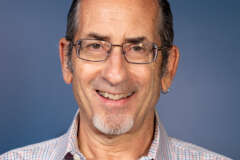
Dr. Robert Heinssen
Click to hear the interview
 Download mp3


By Dorothy Ramienski
Internet Editor
FederalNewsRadio

Post traumatic stress disorder among members of the military has gained attention from both federal officials and the general public since the start of the Global War on Terrorism, and was thrust into the limelight again in the wake of Thursday's shooting at Ft. Hood, Texas.

Federal News Radio told you over the summer about a unique study being conducted by the U.S. Army and the National Institute of Mental Health (NIMH).

Dr. Robert Heinssen, Acting Director of Services and Intervention Research at NIMH, joined the Daily Debrief again on Friday with an update on the study and how it will hopefully help the troops.

"We're in the start up phase of the study, which means the investigators are putting into place all of the infrastructure that's necessary to field a study that's going to involve both survey research and an interrogation of data that's available to the Army on soldiers as part of their normal experience through the training and deployment cycle -- and then also biological data that may inform our understanding of the neurobiology and risk factors for different mental illnesses and suicide."

He said the first round of data collection should begin in the late winter or early spring of 2010.

Since the study is broken up into different parts, Dr. Heinssen said data collection will happen in a variety of ways.

"One is a part that capitalizes on data that the Army routinely collects on soldiers. We think that there may be information there that will help us understand some of the risk factors that emerge over time. That will give us some good hints about places that we could look more specifically."

He added that this is where the surveys come in. The questions will look at a combination of presumed risk and resilience factors.

Heinssen stressed that there is an emphasis on what factors increase the risk of mental illness, and what factors might decrease it.

"By understanding both of them, it gives us a way of planning for interventions that will interrupt a risk process early so that it doesn't culminate in either disorder or acute distress, such as suicide -- or that will be able to augment strengths and capacity that soldiers have, so that they develop an increased resilience and buffer against adverse events so that when they're confronted with challenges, they're able to perform with success and not be impacted in terms of any kind of traumatic stress reactions."

As it stands right now, Dr. Heinssen said it is widely accepted that a person's ability to manage and operate under stressful conditions has to do with a combination of personal constitution, attitudes and intensity of the situation itself.

"In stressful but not traumatic situations, most people will do just fine. In the most traumatic situations, just about everybody will struggle. It's always a balancing act between personal capability and the magnitude of the situation. We try to build up the person as much as possible and we try to minimize the negative elements of the situation as far as possible so that we can keep that balance that assures successful performance."

In terms of the biological data, the process gets tricky. Dr. Heinssen explained that pre-existing mental conditions play a role, but they're not always properly diagnosed initially.

"For example, depression -- if you ask a person, "are you having difficulty sleeping? Have you felt that your energy level isn't the way that it used to be? Are you irritable? Do you cry easily? Do you have periods where you feel down?" They may say, "yes, yes, yes". Then, if you say, "you have major depression," they say, "no, I don't". We've learned that in some of the large-scale epistemology studies of the prevalence of mental disorders in the United States that there are a sizable group of individuals who will endorse individual signs and symptoms associated with mental disorder, but not in their own minds perceive that as a mental disorder, per se."

This is one of the reasons why mental disorders such as PTSD are so hard to treat -- and suicide is difficult to prevent.

Dr. Heinssen said there is probably no single or small set of factors that put someone at risk for suicide; rather, multiple, smaller incidents accumulate over time and then boil over.

"These small, weakly linked risk factors accumulate. They increase the risk profile and then, under certain circumstances -- perhaps environmental circumstances -- are the final straw and the person reaches the tipping point and they get to that point where they think there's no way out."

Thus the reason for the current, massive study.

Dr. Heinssen said it is expected that the first wave of data collection from soldier surveys will be completed by next April or May. This will be immediately analyzed and used in subsequent stages of the study -- and to figure out where researchers need to look next.

"It's called an adaptive research design. So, over time the design changes to really maximize the chance that you're following through with the most promising signals. [It] is designed as a five-year study, but we're very, very confident that we will be getting usable information to the Army at each stage of data collection."

For more information, NIMH original press release

Listen Now!
Daily Debrief Blog

Today's Headlines

WFED Shows

Column Thumbnail Federal Drive

with Tom Temin and Jane Norris, Monday-Friday 6-10am

Column Thumbnail In Depth

with Francis Rose, Monday-Friday 1-3pm

Column Thumbnail The Daily Debrief

With Chris Dorobek and Amy Morris, Weekdays 3-7pm

Home | About Us | Privacy Statement | Terms of Use | Copyright Infringement | EEO Public File Report | Bonneville International
AP material Copyright 2009 Associated Press. All rights reserved. This material may not be published, broadcast, rewritten, or redistributed.