Home > Shows > Daily Debrief > Daily Debrief Blogs
The Daily Debrief
Monday-Friday, 3-7pm
with Chris Dorobek and Amy Morris.

Will House healthcare bill affect the Federal Employee Health Benefits Program?

November 6, 2009 - 9:16am

Rep. Edolphus Towns
Click to hear the interview
 Download mp3
Rep. Darrell Issa
Click to hear the interview
 Download mp3

By Dorothy Ramienski
Internet Editor
FederalNewsRadio

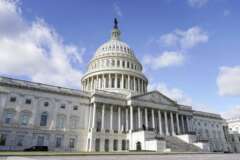
The debate about healthcare reform continues on Capitol Hill, with the House planning to vote on its version this Saturday.

Rep. Darrell Issa (R-Ca.) earlier this week called for a hearing about the bill -- HR 3962 -- suggesting that federal workers might be forced to leave the Federal Employee Health Benefits Program if the bill is passed.

Rep. Issa is ranking member on the House Oversight and Government Reform Committee.

Federal News Radio contacted Issa and committee Chairman Edolphus Towns (D-NY) for comment.

Rep. Towns said it won't affect feds, period.

"I thought the federal employees would be happy because, as much as it doesn't affect them, some of their family members now would be covered. . . . The key thing that people keep talking about and keep circulating -- pre-existing conditions, etcetera -- this bill would not do anything that would damage federal employees."

Many are wondering, though if there would be a tangential affect, since FEHBP, like any other employer plan, uses insurance companies that will undoubtedly see changes.

Rep. Issa said changes in the bill will affect all Americans, including federal employees.

"Although [the bill] does away with co-pays for preventive medicine, which sounds like a good thing, that gets ultimately passed on in higher premiums. So, what ends up happening is a plan that, today, you choose which has co-pays and costs 'X' will simply do away with co-pays for preventive medicine . . . except unless you're using every one of those you're never going to get the money back related to the increase. So, to a great extent, the Federal Employee Heathcare Benefit plans have one thing more than anything else, which is choice. Lots of choice. Well, some of those choices, because of contract interference, are going to be taken away."

The National Active and Retired Federal Employees Association (NARFE) has been watching this bill closely.

NARFE has not endorsed any bill in either the House or Senate having to do with healthcare reform, though it has looked at both sides and said both sides make valid points.

Rep. Towns said he thinks the changes in the bill should be seen in a positive light for two reasons, "Number one, [feds'] situations will not change drastically. That's number one -- and number two, their family members -- you have federal employees that have sisters and brothers and cousins and aunts and uncles that are uninsured. HR 3962 will make it possible for them to be insured."

Rep. Issa acknowledged that, as the bill is written right now, there are no specific mentions of changes to FEHBP, but that doesn't mean the federal employees' plan is safe.

"The first bill took the Federal Employee Health Benefit plan out for five years. This one brings it in, so -- yes, federal employees are stuck with whatever is the good or the bad of this bill, but remember this is a bill that does nothing to . . . lower costs. It will do nothing to stop defensive medicine. It will do nothing to bring down the cost of your medicines or your hospital or doctor's visits. So, the one thing you know as a federal employee is you're nearly 30 percent -- 28 percent, depending upon which part of the government you're in -- co-pay or your premium sharing is going to go up, not down."

In an email to Federal News Radio, NARFE said, as an employer plan, FEHBP would see the following changes under the House bill:

  • Covering children through age 26;
  • Restrictions on the amount and use of flexible benefit plan and high deductible plans;
  • FEHBP health plans will need to comply as will all other private insurance plans with lower cost to preventative care;
  • If an older federal worker left service and went to another employer, an older worker would have to receive at least the same health benefits as he did under the federal government.
NARFE added that, no matter what happens, there will be a grace period before any reform goes into effect except for the age 26 requirement.

Rep. Towns said that he thinks all types of rumors are being circulated, which is creating a problem, "The fact that this legislation eliminates the existing coverage that you have -- that is absolutely not true. They're saying that, once this occurs, the program that you're in, you'll now be out [and] it will send federal employees to different programs -- not true."

Rep. Issa said there is nothing in the bill that should alleviate the concerns of those who already have insurance, "All the CBO scoring shows that it's going to increase the cost of healthcare [an] effective tax on seniors because $500 million of the scoring of this is taking money out of Medicare. So, for retired federal employees -- they have to say, what is going to be better for me when you take $500 million out of programs that I'm already using?"

Towns said he supports the legislation because he feels it will truly change people's lives for the better.

"Many people who've been walking around with no insurance will be able to get insurance, and that, to me, makes a difference."

He added that he wants to stress that the bill will allow everyone to keep the health care coverage they have if they are already satisfied.

"This does not downgrade your plan. This does not put you in another plan or anything. I really feel that we have not said that enough and we need to spread the word to eliminate these false rumors that are being circulated."

Rep. Issa said he doesn't support the current bill, HR 3962, because of what he thinks it will do to healthcare overall.

"We have a good plan -- the 8 million of us covered under these 300-plus different health plans. One of the things we do is we don't pay a different amount based on age. We don't pay a different amount if we move from plan to plan based on pre-existing conditions. We only pay for that plan's rate. I have a bill -- HR 3438 -- that says let the American people have access to the same system -- a separate pool, of course -- but let them have access to these reforms that have worked very well for the 8 million of us. . . . That bill, of course, was dead on arrival because it's not about fixing specific problems, it's about nationalizing the control over healthcare."

For more about possible changes to your pay & benefits, visit Mike Causey's Federal Report page.

Listen Now!
Daily Debrief Blog

Today's Headlines

WFED Shows

Column Thumbnail Federal Drive

with Tom Temin and Jane Norris, Monday-Friday 6-10am

Column Thumbnail In Depth

with Francis Rose, Monday-Friday 1-3pm

Column Thumbnail The Daily Debrief

With Chris Dorobek and Amy Morris, Weekdays 3-7pm

Home | About Us | Privacy Statement | Terms of Use | Copyright Infringement | EEO Public File Report | Bonneville International
AP material Copyright 2009 Associated Press. All rights reserved. This material may not be published, broadcast, rewritten, or redistributed.